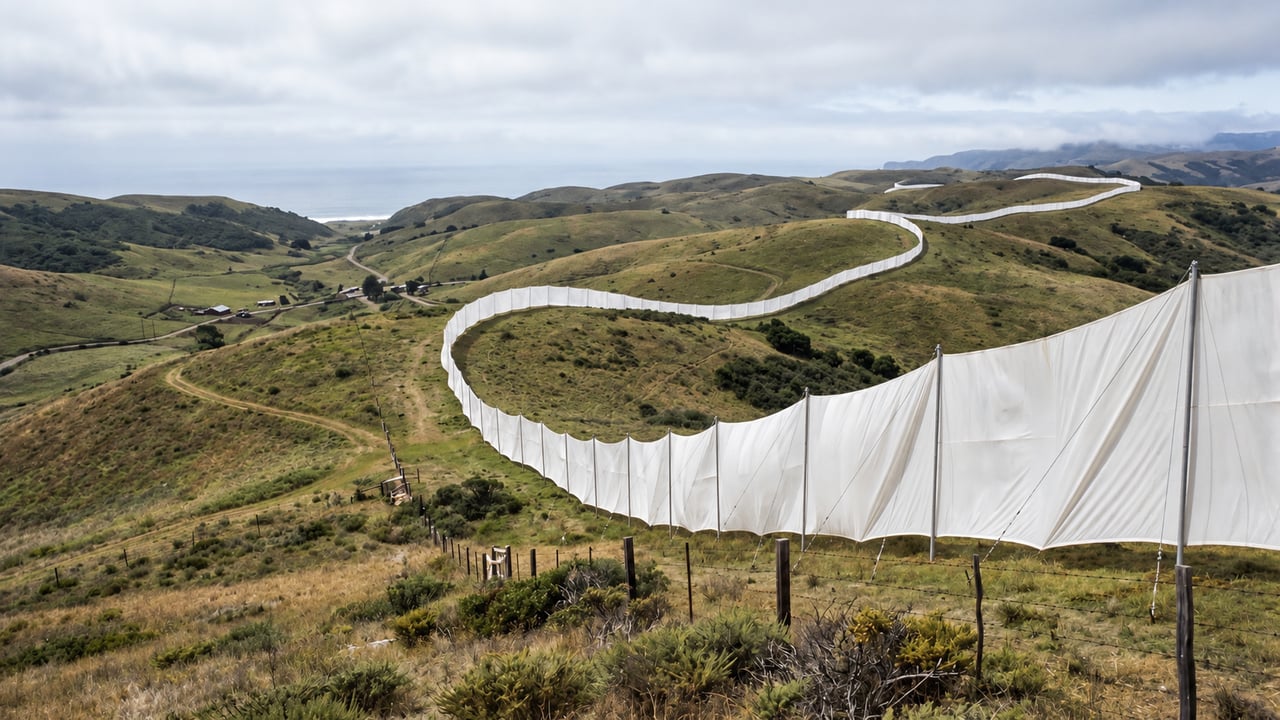
The Marin History Museum is presenting a talk on Christo and Jeanne-Claude’s Running Fence. The afternoon program, part of the museum’s Speaker Series, takes place Wednesday, October 21, 2026, at 2 p.m. at First Presbyterian Church in San Rafael. It revisits the 24.5-mile fabric artwork that crossed Marin and Sonoma counties for two weeks in 1976 - and the ranching country and land-use fights it ran straight through.
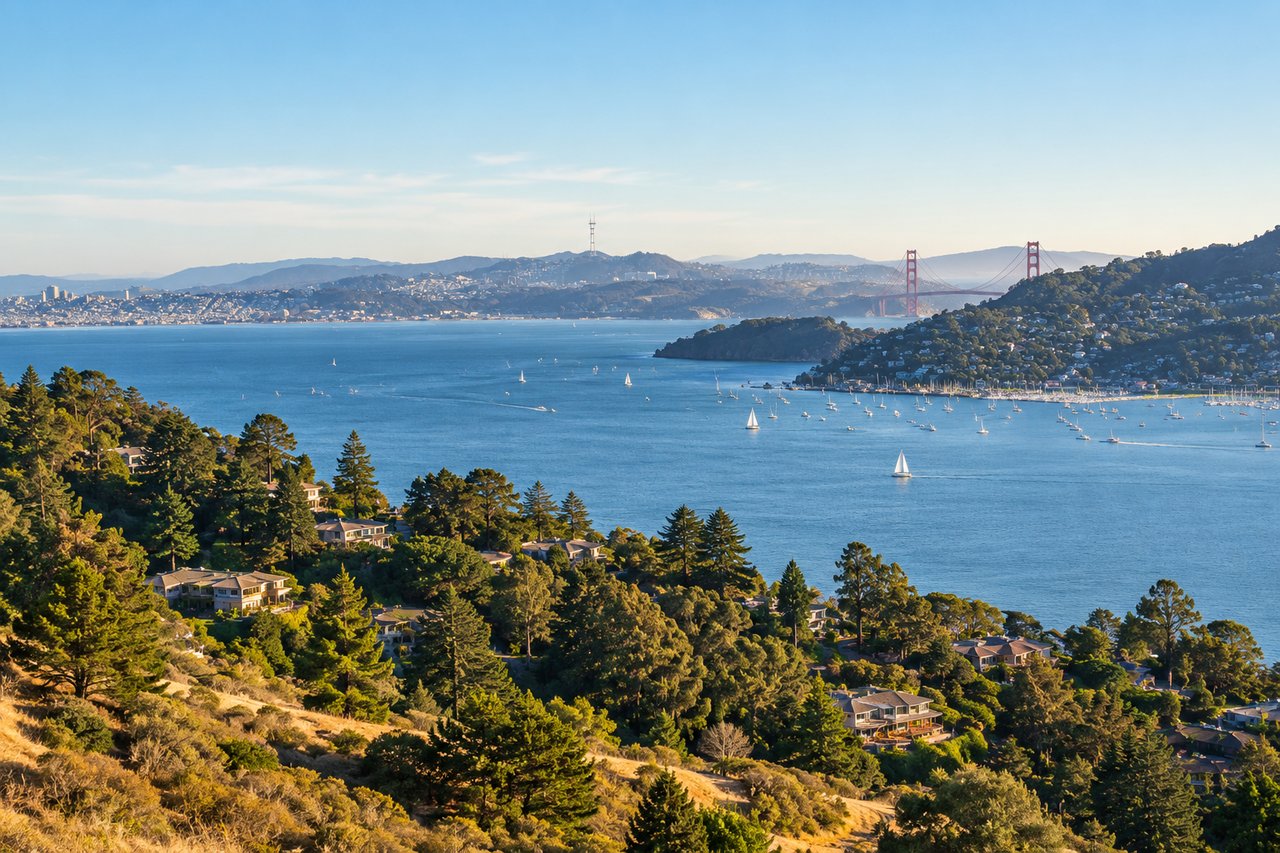
This one lands close to home for us. Running Fence dropped into the Pacific at Bodega Bay and threaded the hills around Valley Ford and the ranchland above Tomales — the same working coast we help buyers and sellers navigate today. One scheduling note worth flagging: this is an afternoon program, so plan for the 2 p.m. start, not an evening talk.
What Was the Running Fence?
Running Fence was a temporary artwork by Christo and Jeanne-Claude, completed on September 10, 1976. At 18 feet tall and 24.5 miles long, it was less a barrier than a ribbon of white nylon that caught the wind and the shifting afternoon light across open ranchland.
It began near Highway 101 at the Cotati ridge, followed the rolling hills west through the town of Valley Ford, crossed 59 private ranches and 14 roads, and slipped into the Pacific at Bodega Bay. Reaching that point took roughly 42 months of planning, public hearings, an environmental impact report, and court sessions - all funded by the artists themselves through the sale of related artwork.
The fence stood for fourteen days. Then it was gone, removed completely, with nothing left on the hills. The work now lives in the collection of the Smithsonian American Art Museum, and this year marks its 50th anniversary.
Why It Still Matters in Marin
Strip away the fabric and Running Fence is really a story about land - who owns these hills, and what the rest of us get a say in putting on them. To build it, the artists had to win over 59 ranchers one handshake at a time. Many of those same families, skeptical at first, became the project’s most vocal defenders.
Those questions never fully went away. The tension between open land and what gets built on it still shapes Marin’s coast and its rural towns, from the ranchlands of Point Reyes to the pasture roads near Tomales. If you’ve ever wondered why West Marin looks the way it does - and stays that way - this history is a big part of the answer.
Why the Talk Is Worth an Afternoon
The session is an informal look at how Running Fence came together and the mark it left on our corner of California. Whether you remember 1976 firsthand or are hearing the story for the first time, it’s a rare chance to sit with a piece of local history most people only know from a photograph.
The church sits in downtown San Rafael, a few blocks from the museum’s own Boyd Gate House and an easy walk to lunch on Fourth Street before the program begins. Reserve your spot in advance through the museum’s ticketing page.
About the Marin History Museum
Since 1935, the Marin History Museum has preserved the county’s story - more than 250,000 photographs, artifacts, and newspapers, plus a research library spanning the Coast Miwok era to the present. The museum is based at the historic Boyd Gate House, 1125 B Street in San Rafael, open Wednesday through Saturday, 11 a.m. to 3 p.m.
If the Running Fence talk leaves you curious, the museum’s current exhibit, Rancho Roots, picks up the same thread of Marin’s ranching past.
When: Wednesday, October 21, 2026, 2:00 p.m.
Where: First Presbyterian Church, Fifth & E Streets, San Rafael, CA
Tickets: Reserve through the Marin History Museum
More Info: marinhistory.org/events
Source: marinhistory.org