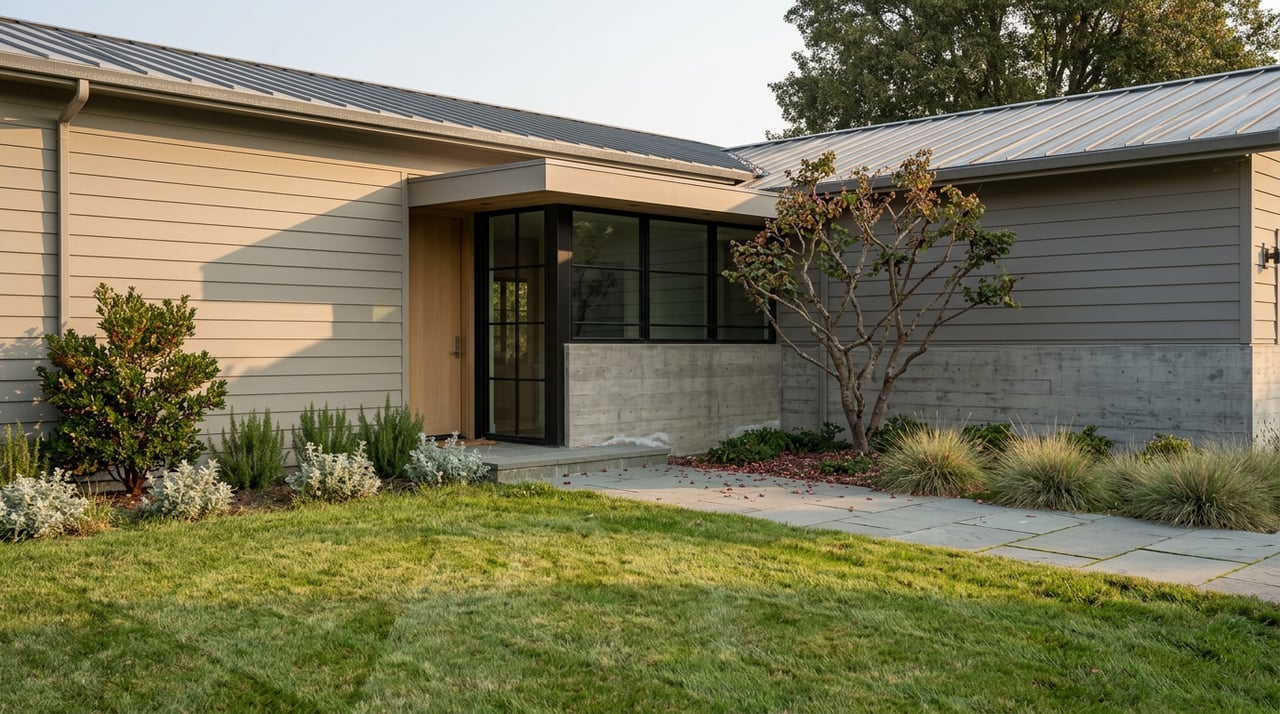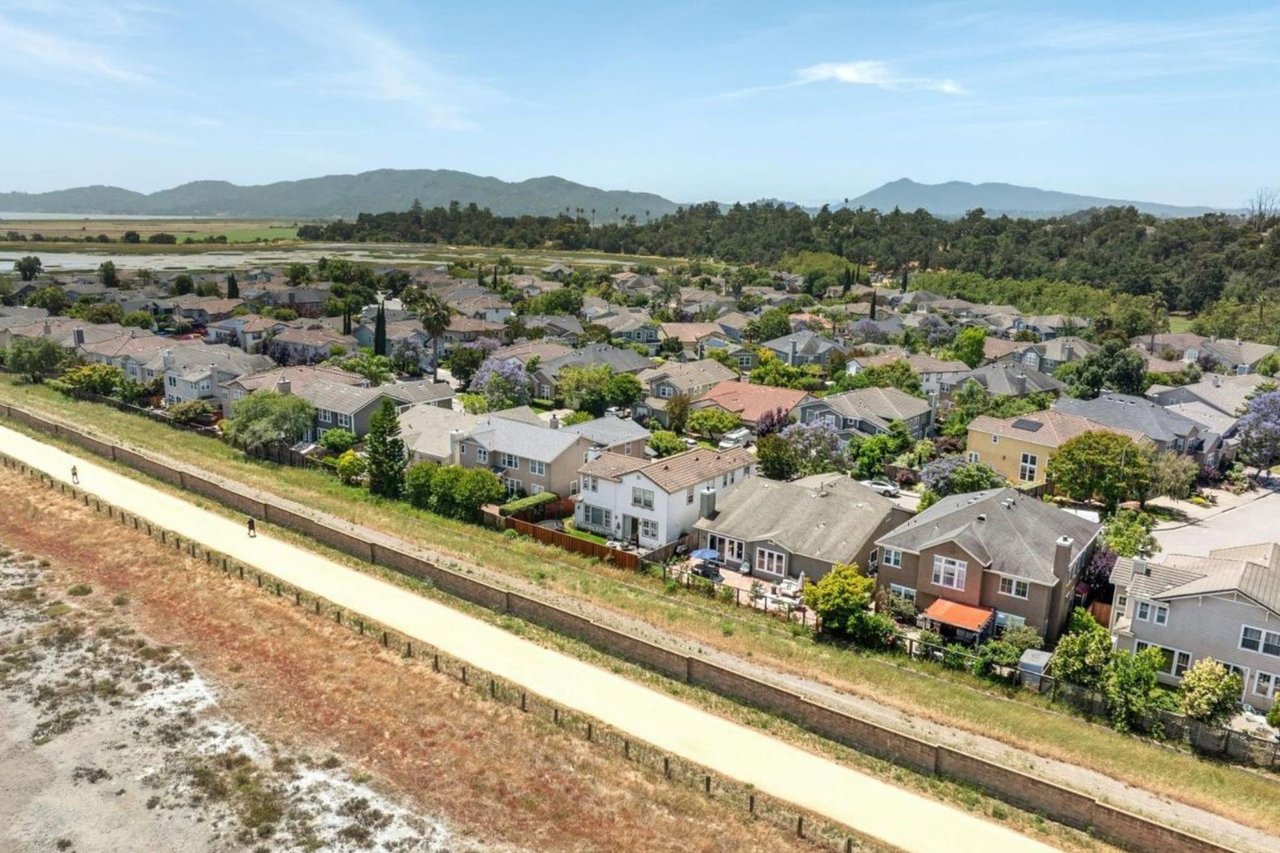
A house on a narrow lane in Stinson Beach, ocean visible from the kitchen window, a septic tank buried somewhere in the side yard. On paper, the buyer with the strongest offer wins that house. In practice, along this stretch of coastal Marin, from Muir Beach down through Bolinas and up the Tomales Bay shoreline to Dillon Beach, the buyer who actually closes is often the one who never had to ask a lender for money at all.
That is not a coincidence, and it is not really about wealth. It is about what a mortgage requires that cash does not.
The Workaround Nobody Puts in the Listing
Getting a home loan on Stinson's flood-mapped lots requires flood insurance. Local agents told the San Francisco Chronicle that the cost of that insurance rarely kills a sale, but for a specific reason: a meaningful share of buyers pay cash and can skip the insurance requirement entirely. One longtime Stinson agent explained the pull of the place to the paper this way:
"they're just willing to take the risk because they love Stinson so much."
That framing matters. It suggests buyers are choosing to accept risk. What the same reporting shows is closer to a structural workaround. Calle del Arroyo, the only access route for hundreds of homes in the area, becomes impassable during king tides. Individual septic tanks serve most of the housing stock, and some have been washed out during storms. A county report cited in that Chronicle piece projects sea levels rising 10 inches by 2040 to 2050 compared to 2000 levels, a shift that would let an ordinary 100-year storm reach homes near the lagoon. The same report names two fixes: elevating Calle del Arroyo and building a shared wastewater treatment system, a capital project the local water district is planning over 15 years at a cost that could reach $85 million. As of that reporting, Marin County had not set aside funding for either project, and instead offered owners guidance on self-taxing or applying for state and federal grants.
None of that shows up on a listing sheet. It shows up in the closing timeline, when a mortgaged buyer discovers that securing insurance takes longer, or costs more, than the contingency period allows.
Two Systems, Two Clocks
Coastal Marin buyers and sellers are working against two separate regulatory clocks right now, and both are mid-revision rather than settled.
| System | What's changing | Timeline | What it means for you |
|---|---|---|---|
| Septic permitting | Marin County is rewriting its Local Agency Management Program, the rulebook governing septic systems in the coastal zone | County is targeting adoption by the end of 2026, after work that began in 2014 | Permit costs and inspection requirements for older or unpermitted systems may shift once the new rules take effect |
| Wildfire and flood insurance | The state's FAIR Plan, the insurer of last resort, caps dwelling coverage at $3 million per structure | Cap already in effect | Higher-value coastal homes often need FAIR Plan coverage layered with a separate policy to reach full replacement value |
Neither clock has finished running. A buyer or seller who treats either system as fixed and known is working from information that could be outdated by the time escrow closes.
What a Century-Old Outbreak Still Explains
The septic overhaul is not an abstract compliance exercise. Marin County has described the current rules as ad hoc, with older buildings grandfathered in while new construction faces costly permitting, and it has been holding community meetings on the update, including one earlier this year at the Bolinas Firehouse, to gather feedback before finalizing the plan. If the county cannot get an approved plan through the Regional Water Quality Control Board and its own Board of Supervisors, state law hands the county a less flexible, one-size-fits-all set of rules instead.
The reason the county has spent over a decade on this comes from its own waterfront. An illness outbreak in the late 1990s, tied to substandard septic systems and unregulated camping along Tomales Bay, pushed the county to fund a community septic system in Marshall that is still in use, pumping effluent under the highway to a seep field rather than relying on individual tanks. That shoreline is not a hypothetical case study. It is where the Tomales Bay Oyster Company operates today, and where Hog Island Oyster Company runs the historic Marshall General Store and its restaurant, Tony's Seafood. Wastewater infrastructure and a working waterfront economy sit within a few hundred feet of each other there, which is part of why the county keeps returning to this rulebook rather than leaving it alone.
For a buyer evaluating a Marshall, Tomales, or Point Reyes Station property, the practical takeaway is simple: ask for the septic inspection form and permit history before the contingency period narrows, not after. In Point Reyes Station specifically, current flood risk modeling puts roughly 8 percent of properties at severe flood risk over the next 30 years, a number worth knowing before assuming a septic system's age is the only variable in play.
The $3 Million Ceiling
On the insurance side, the FAIR Plan exists because much of coastal Marin's private insurance market has pulled back from wildfire exposure. The plan covers fire, lightning, and a handful of related perils, but nothing else. It does not cover liability, theft, or water damage, which means most owners pair it with a separate Difference in Conditions policy to approximate a standard homeowners policy.
The complication specific to this stretch of coastline is the plan's cap. Coverage tops out at $3 million per dwelling, and consumer advocates have pointed out that many Marin homes cannot reach full rebuild value at that ceiling, particularly properties that carry both flood and fire risk at once, a combination they describe as common throughout the county. That combination describes a large share of coastal Marin's inventory: bluff-top homes above Bolinas, lagoon-adjacent properties in Stinson Beach, and bayfront parcels along Tomales Bay all carry some version of both exposures.
For a lender, this is not a footnote. A loan requires insurance sufficient to cover the loan amount. If a home's rebuild cost exceeds what the FAIR Plan alone provides, the buyer needs a layered policy in place before funding, and assembling that layered policy takes real time. That is the clock actually running during a coastal Marin escrow, more often than the inspection period gets credit for.
Before You Write the Offer
A few habits make the difference between an offer that looks strong and one that actually closes on schedule.
- Ask the septic question first. Request the county's inspection form and permit history before removing contingencies, not after an inspector finds a problem.
- Get an insurance quote in writing early. Ask directly whether the address will need FAIR Plan coverage plus a Difference in Conditions policy, and get that answer before the contingency period is close to expiring.
- Check the coastal zone boundary. All of Tomales Bay and long stretches of the Marin coast fall inside the California Coastal Act zone, where septic or building work often needs a separate coastal permit on top of a standard county permit.
- Weigh the timeline alongside the price. An offer that assumes a fast, ordinary close on a home that will need a new insurance stack is not necessarily the strongest offer on the table, even if the number is highest.
The Question Underneath the Price
What looks like a cash buyer's advantage in coastal Marin is really a response to two systems that have not caught up with the area's risk profile yet. The county's septic rulebook is still being rewritten. The state's insurance backstop is capped in a way that does not match what many coastal Marin homes would actually cost to rebuild. Both of those facts will keep shifting through the rest of 2026, which means the smart move for anyone buying or selling from Muir Beach to Dillon Beach is to treat insurance and septic status as part of the negotiation itself, not paperwork to sort out after the price is agreed.
Do you need flood insurance to buy in Stinson Beach? Only if you finance the purchase. Lenders in the mapped flood zone require it. Cash buyers are not required to carry it, which is part of why cash offers are so common in that specific market.
What does a Difference in Conditions policy actually cover? It fills the gaps the FAIR Plan leaves open, including liability, theft, and water damage, since the FAIR Plan itself only covers fire and a few related perils.
Will the septic rule changes affect a home I already own? The county has said the goal is to fix inconsistent enforcement and add lower-cost system options, but the specifics will not be final until the Local Agency Management Program is adopted, which the county is targeting for the end of 2026.
Coastal Marin rewards patience and local fluency more than almost any other part of the county, and the properties that make the closing pages here are usually the ones where someone asked the right question about septic and insurance before falling in love with the view. If you are weighing a purchase or a listing anywhere from Muir Beach to Dillon Beach, Marks Realty Group can walk through what a specific parcel's septic history and insurance path actually look like before you write the offer or set the price.