In August 2020, a lightning strike three miles southwest of Olema started the Woodward Fire. It burned for weeks through Point Reyes National Seashore, closed the park to the public, and pushed evacuation warnings as far as Inverness Park before crews finally boxed it in near five thousand acres. Not a single home in the area lost a shingle. Their owners' insurance did something else instead: it simply stopped being available to anyone trying to buy in. That is the part of Marin's fall fire season almost nobody explains to buyers until they are living through it: a binding restriction. And this October, with the state's insurer of last resort raising rates by 29.1 percent for its more than 675,000 policyholders effective October 15, per KQED, it is worth understanding before an offer is written, not after.
Key Takeaways
A wildfire nearby, even miles away, can trigger a "binding restriction" that freezes new insurance policies across an entire ZIP code, which can stall a purchase mid-escrow.
A binding restriction is not the same as California's SB 824 moratorium, which only protects existing homeowners from non-renewal for one year after a declared wildfire emergency.
One in 15 Marin homes sits in a "very high" wildfire hazard zone, and the risk has spread beyond West Marin into Mill Valley, parts of Sausalito, and Kentfield.
The California FAIR Plan caps residential dwelling coverage at $3 million, often short of replacement cost for hillside and waterfront homes in this market.
FAIR Plan rates rise by an average of 29.1 percent statewide starting October 15, 2026.
Buyers should get firm, bindable insurance quotes during the inspection and appraisal contingency window, not after contingencies are removed, and sellers in higher-risk zones can request a free Wildfire Risk Report before listing.
What a Binding Restriction Actually Does
A binding restriction is a temporary hold a carrier places on writing new policies once a wildfire ignites nearby. Existing policyholders are untouched. What stops is anyone new getting in. The complication is how loosely "nearby" gets defined. A fire burning on one side of the county can freeze underwriting across an entire ZIP code, including homes that never smell smoke. A buyer mid-escrow when that happens finds their lender simply will not fund, because no lender closes without proof of bindable coverage. The deal rarely dies outright. It stalls, sometimes for a week, sometimes for a month, until the fire is contained and carriers reopen the books.
Marin's Hillside Towns Carry More of This Than People Assume
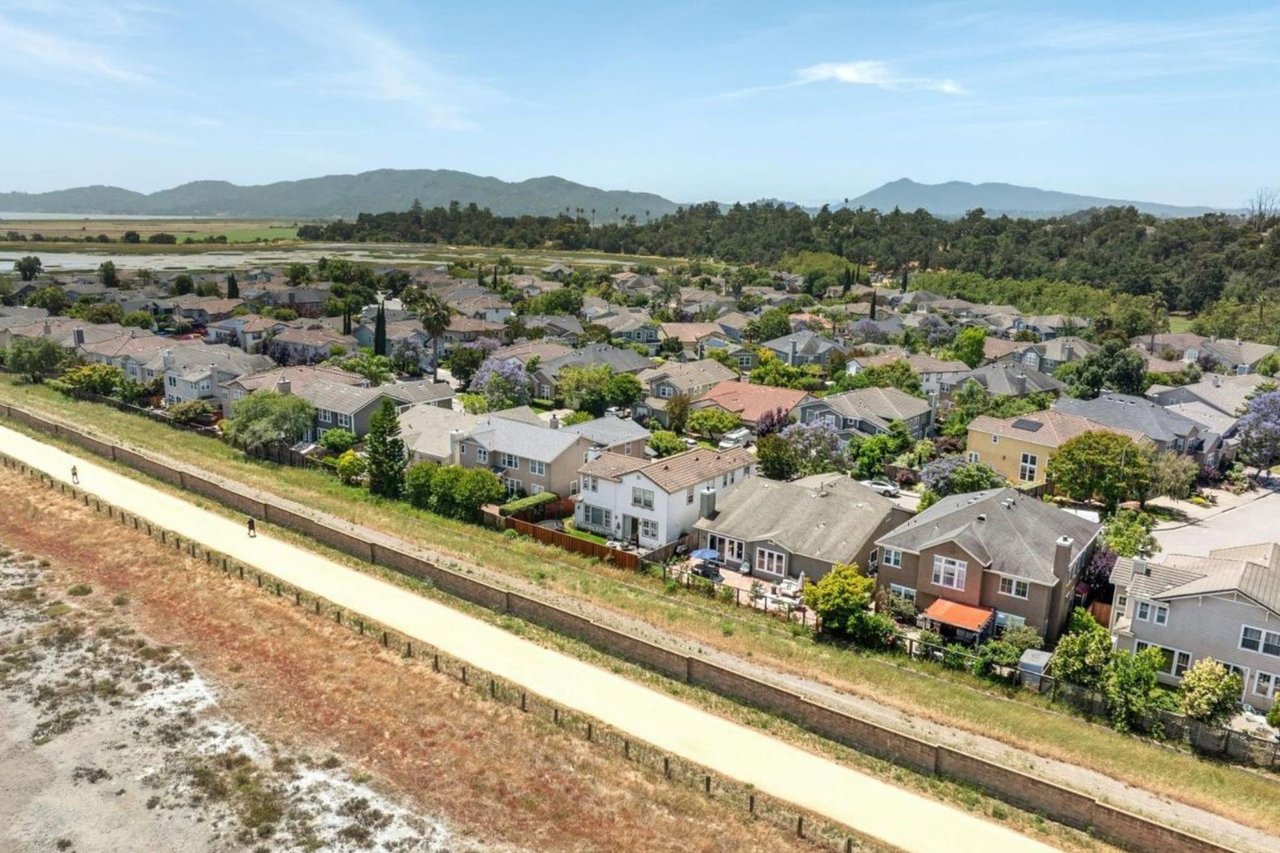
This used to be framed as a West Marin problem. It isn't anymore. The Marin Independent Journal has reported that one in fifteen homes in the county, roughly 7,000 properties, sits in a "very high" wildfire hazard zone, and that Marin ranks third statewide for homes at elevated fire risk over the next thirty years. Insurance brokers quoted in that reporting pointed to the shift directly: coverage trouble that once lived almost entirely in West Marin has moved into Mill Valley, parts of Sausalito, and Kentfield, with Corte Madera and Larkspur, which share the Christmas Tree Hill neighborhood, singled out for serious exposure. Cal Fire's adopted hazard maps back this up, placing more than 100,000 acres of Marin into the "high" severity category, a 33 percent jump from the 2007 maps, with virtually all of Stinson Beach moving into "very high" and Inverness named among the areas facing the greatest exposure.
A Different Rule Handles What Happens After the Fire Is Out
Buyers often conflate a binding restriction with California's SB 824 moratorium, but the two protect different people at different moments. SB 824 requires that once the Governor declares a wildfire state of emergency, insurers cannot cancel or decline to renew existing residential policies in the affected or adjacent ZIP codes for a full year afterward. That is a homeowner's protection. It does nothing for a buyer trying to bind a brand new policy mid-escrow, which is exactly the gap a binding restriction fills instead. The two rules can, and often do, sit over the same neighborhood at the same time, doing entirely different jobs.
When the FAIR Plan Is the Only Door Left
Hillside buyers who cannot bind a standard policy usually land on the California FAIR Plan, paired with a difference-in-conditions policy to cover what the FAIR Plan leaves out, liability and water damage among them. In Marin, that fallback has a ceiling: FAIR Plan dwelling coverage tops out at three million dollars, which does not stretch far across a market where hillside and waterfront properties routinely exceed it, particularly where fire and flood exposure overlap on the same parcel. Layer October's rate increase on top, and a buyer landing on the FAIR Plan this fall should expect a materially higher premium than a comparable policy would have carried even twelve months ago.
Quick facts for hillside buyers and sellers this fall:
One in 15 Marin homes, about 7,000 properties, sits in a "very high" wildfire hazard zone (Marin Independent Journal)
FAIR Plan dwelling coverage caps at $3 million, often below replacement cost for hillside luxury homes
FAIR Plan rates rise an average of 29.1 percent statewide starting October 15, 2026 (KQED)
SB 824's one-year non-renewal protection is separate from, and does not solve, an active binding restriction
What We Tell Buyers and Sellers This Time of Year
Our advice shifts every fall, and it starts earlier than most buyers expect. We push for firm, bindable insurance quotes during the inspection and appraisal contingency window, not after contingencies come off, so there is still a clean way to renegotiate or extend if a quote falls through. For sellers in the higher-risk zones, we often recommend requesting a free Wildfire Risk Report through the Marin Wildfire Prevention Authority before the home ever hits the market. It is funded through the county's Measure C parcel tax, and a property with documented defensible space and hardening work is simply an easier property for a buyer's carrier to say yes to, restriction or not. None of this is insurance advice; we are not licensed to sell coverage, and we always point clients to a broker who can underwrite the specifics. What we can do is flag the timing early enough that it never becomes a surprise.
Fire is not the only quiet dealbreaker hiding in a Marin transaction. We looked at a different version of the same problem in The Water Right That Can Make or Break a Marin Waterfront Deal, where a permit most buyers never think to check can hold up closing just as effectively as a fire fifteen miles away.
Looking Ahead
Fall fire season is not going away, and neither is the insurance market tightening around it. What buyers and sellers can still control is sequencing. Shop insurance early. Document mitigation work before listing. Understand which rule actually governs a given property: a binding restriction, the SB 824 moratorium, or a FAIR Plan cap. Get that right, and a potential closing-week emergency becomes an ordinary step handled weeks earlier in escrow.
Frequently Asked Questions
What is a wildfire binding restriction?
A temporary hold a carrier places on issuing new policies, or changing existing ones, for properties near an active wildfire. It typically lifts once the fire is contained and risk is reassessed.
How long does a binding restriction usually last?
It varies by carrier and by fire. Some lift within a couple of weeks of containment. Others, in areas with repeated wildfire activity, can run a month or longer.
Is a binding restriction the same as California's one-year insurance moratorium?
No. SB 824's one-year moratorium protects existing homeowners from non-renewal after a declared wildfire emergency. A binding restriction affects new policies, which is what a buyer mid-escrow actually needs.
What can a Marin buyer do if a binding restriction hits mid-escrow?
Options generally include locking a policy to start on the closing date before any restriction takes effect, pivoting to a FAIR Plan plus difference-in-conditions structure, or negotiating a short extension through escrow rather than closing without coverage. A licensed insurance broker should confirm what applies to the specific property.
Sources: KQED, Marin Independent Journal, Point Reyes Light, California Department of Insurance, National Park Service (Woodward Fire incident records)